The Hidden Logistics of Hindu and Muslim Weddings in T&T: A Guide for Secular Couples
Navigating the intricate timelines and cultural nuances of Hindu and Muslim wedding traditions in Trinidad & Tobago requires more than just a planner.
For many couples in Trinidad & Tobago, a wedding is more than just a union of two people; it is a complex negotiation of heritage, community, and deep-seated tradition. In our multi-cultural landscape, particularly when navigating Hindu or Muslim customs, the "logistics" go far beyond booking a hall in Port of Spain or finding a caterer in Chaguanas.
If you are a secular couple—perhaps one where both partners are modern professionals who want to honor their roots without being bound by every strict ancestral rule—you are likely facing a unique set of challenges. You aren't just planning a party; you are managing two distinct religious calendars, varying dietary requirements, and specific ceremonial timelines that can easily clash if not orchestrated with precision.
This is the investigative deep dive into the logistical machinery behind Hindu and Muslim weddings in T&T, and what you need to know to ensure your celebration is respectful, seamless, and, above all, your own.
The Sacred Clock: Navigating Muhurat and Nikah Timelines
In a typical secular wedding, the timeline is dictated by the venue's availability and the photographer's light. In a Hindu or Muslim ceremony, the clock is often governed by the divine.
For Hindu weddings, the concept of Muhurat—the auspicious timing for the ceremony—is paramount. You cannot simply decide that your wedding starts at 3:00 PM because that’s when the sunset looks best for your Instagram reel. Your Pandit will consult the Panchang (traditional Hindu calendar) to identify the exact window where the celestial alignment favors your union. This might mean your ceremony begins at the crack of dawn or at a very specific, seemingly arbitrary hour in the evening. Logistically, this means your guests (especially those traveling from Tobago or outside your immediate parish) need significant lead time and clear communication.
Muslim weddings operate on a different, yet equally vital, rhythm. The Nikah (the formal marriage contract) is the centerpiece. While it doesn't rely on astronomical "auspicious hours" in the same way, it is heavily dependent on the availability of the Imam and the religious community. Often, Nikah ceremonies are held in mosques or private family homes, and the timing is carefully coordinated to respect prayer times.
The Secular Solution: If you are balancing both traditions, the logistical "sweet spot" is often found by separating the religious rites from the social reception. Many successful T&T couples opt for a morning religious ceremony (Hindu or Muslim) followed by a completely secular, modern reception in the evening. This allows the "sacred clock" to run its course without causing your guests to miss the cocktail hour.
The Sacred Space: Mandaps, Mosques, and the Dietary Diplomacy
Once the timing is set, you must contend with the physical requirements of the ceremony. The venue is not just a room; it is a ritual space.
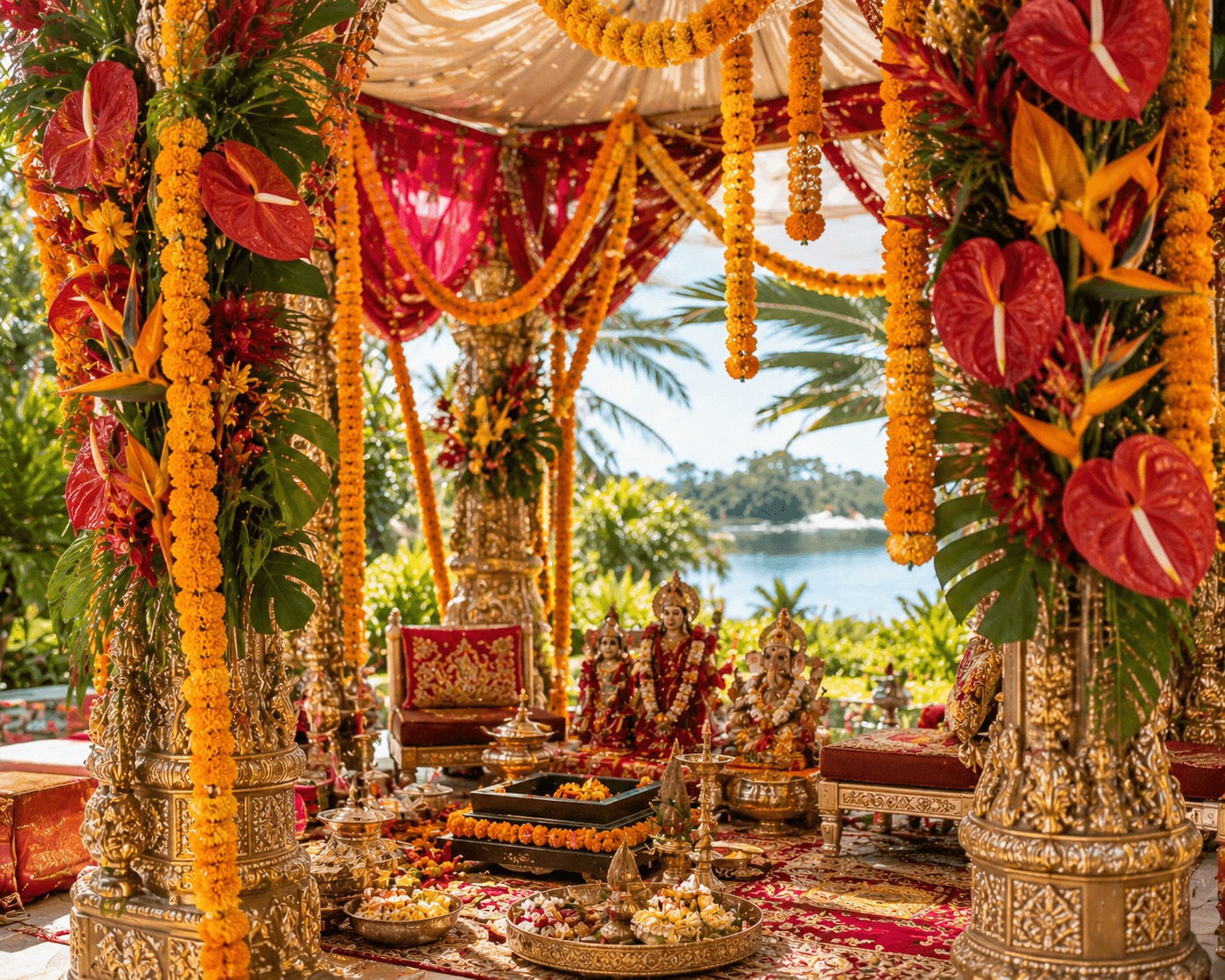
In a Hindu ceremony, the Mandap—the four-pillared canopy under which the wedding takes place—is the heart of the event. Setting up a Mandap in a banquet hall in San Fernando or a garden in Maracas requires specialized vendors. You aren't just hiring "decor"; you are hiring ritual architecture. A well-constructed Mandap can cost anywhere from $3,500 TTD to $15,000 TTD depending on the complexity of the floral work and the quality of the fabrics.
For Muslim ceremonies, the focus often shifts to the Walima (the wedding feast) and the decor that reflects the elegance and modesty of the occasion. The logistics here often involve ensuring the venue can accommodate both the solemnity of the Nikah and the celebratory nature of the Walima.
However, the most significant logistical hurdle for the modern T&T couple is Dietary Diplomacy.
In Trinidad, food is our love language, but it can also be a minefield. A Hindu ceremony often necessitates a strictly vegetarian menu to respect the sanctity of the ritual and the preferences of many guests. Conversely, a Muslim wedding requires strict adherence to Halal standards. If you are hosting a combined event, you cannot simply "add some chicken" to a vegetarian spread.
The Logistical Checklist for Catering:
- ✓Halal Certification: If serving meat, ensure your caterer is certified and can provide proof.
- ✓Vegetarian Integrity: Ensure Hindu vegetarian dishes are prepared in clean vessels, separate from meat, to respect religious sensitivities.
- ✓The "Trini" Factor: Always budget for extra servings. In T&T, "enough" is never enough, especially when serving classics like pelau or curried channa and aloo.
- ✓Costing: Expect to pay between $150 TTD and $350 TTD per head for high-quality, culturally specific catering in the local market.
The Hidden Ledger: Budgeting for Tradition and the "Carnival Factor"
Beyond the standard costs of a wedding, Hindu and Muslim ceremonies carry specific "tradition premiums" that can catch secular planners off guard.
First, there are the honorariums. In T&T, it is customary to provide a respectful offering to your Pandit or Imam. While there is no fixed rate, you should budget between $1,000 TTD and $3,000 TTD for these essential spiritual leaders.
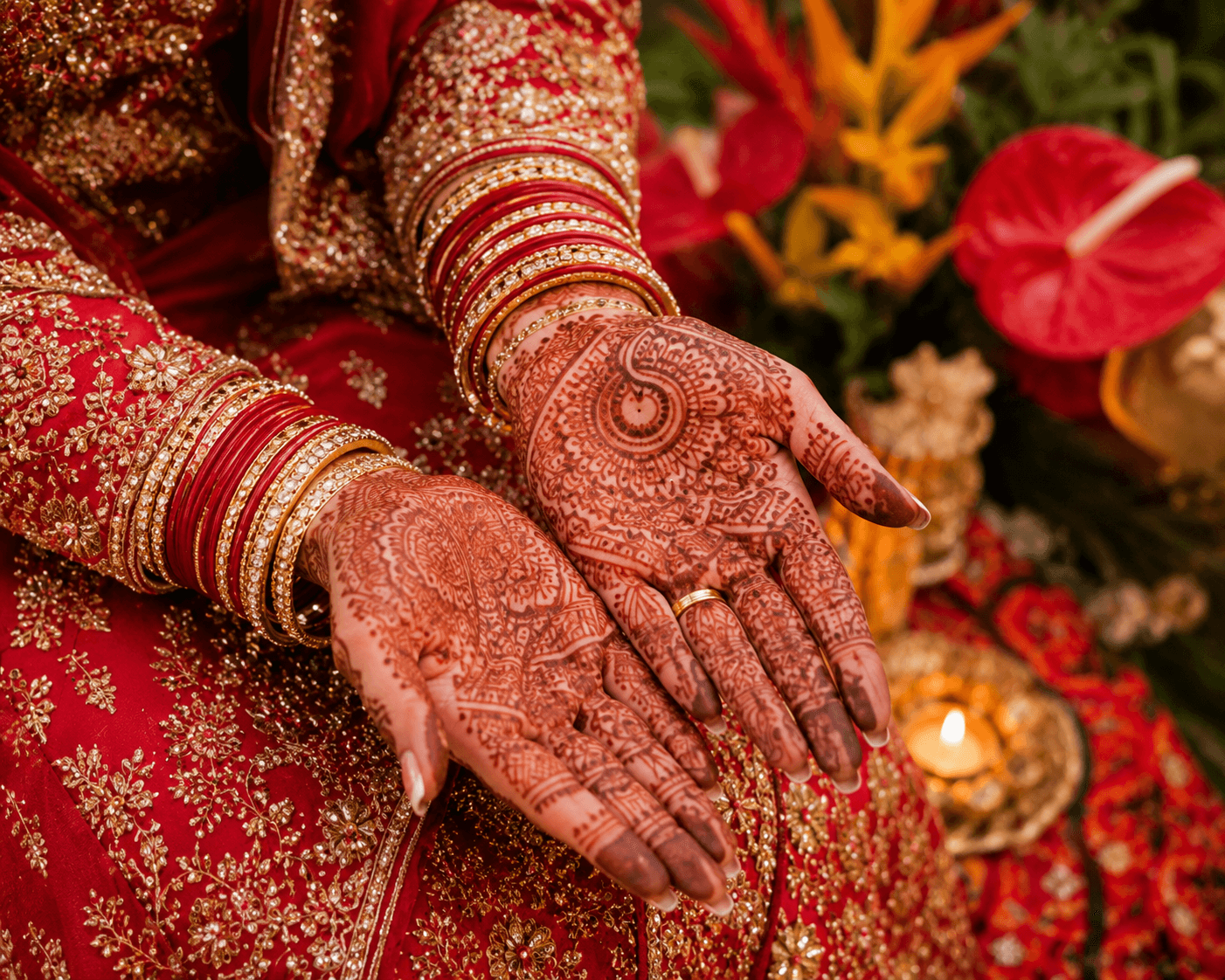
Second, the specialized attire. A traditional South Asian wedding involves intricate silks, heavy embroidery, and jewelry that often requires sourcing from specialized boutiques in areas like Chaguanas or even importing from overseas. This is not a "one-size-fits-all" expense.
Finally, you must navigate the Trinidadian Seasonality. If you are planning a wedding in February or March, you are stepping into the shadow of Carnival. During this period, vendor availability plummets and "blackout dates" become common. A venue that costs $10,000 TTD in October might demand a much higher premium, or simply be unavailable, due to the sheer volume of social activity in the country.
Comparison of Logistical Requirements
| Feature | Hindu Wedding Focus | Muslim Wedding Focus | Secular/Combined Approach |
|---|---|---|---|
| Primary Timing | Muhurat (Auspicious) | Prayer/Imam availability | Separate ritual & social times |
| Core Decor | Mandap & Sacred Fire | Elegant Walima settings | Themed "Fusion" decor |
| Key Dietary Need | Strict Vegetarian options | Strictly Halal meat | Certified Halal + Veg options |
| Essential Leader | Pundit | Imam | Professional Officiant/Registrar |
| Estimated Leader Fee | $1,000 - $3,000 TTD | $1,000 - $3,000 TTD | N/A |
Navigating these logistics doesn't mean you have to surrender your modern identity to ancient rules. Instead, it's about understanding the why behind the what. When you understand that the timing is about the stars and the food is about respect, the logistics stop being "problems to solve" and start being the very threads that weave your two histories into a single, beautiful T&T tapestry.
Planning your Caribbean wedding?
IslandTulle is launching soon — the Caribbean's first dedicated wedding marketplace for T&T couples. Join the waitlist for first access.